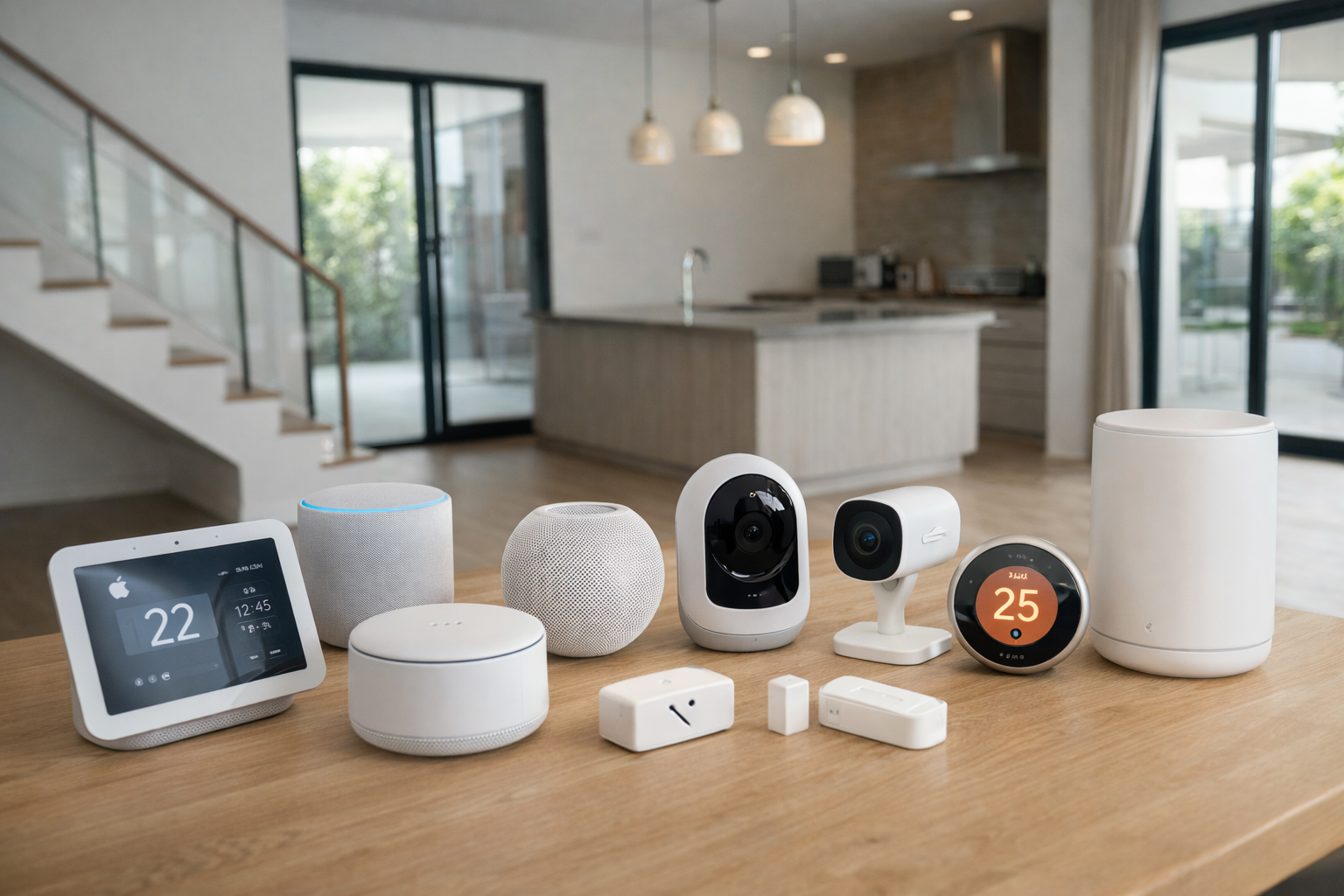
A good smart home in 2026 isn’t the one with the most gadgets it’s the one that quietly works in the background, stays stable when the internet hiccups, and doesn’t turn your house into a patchwork of incompatible apps.
In Thailand, smart-home adoption has matured fast. People aren’t just buying smart plugs anymore. They’re dealing with EV chargers, rooftop solar planning, heavier home networking loads, and more serious security expectations. That changes the game: you must think in “systems,” not “devices.”
What “Good Smart Home” Means in 2026 (4 non-negotiables)
- It should still function when the internet is down.Your basic lighting control, essential automations, and door access should not collapse the moment your ISP has a bad day. Favor setups that support local control and keep core actions working on the home network.
- It should be cross-brand and future-proof.This is why Matter matters (pun intended). Matter aims to improve interoperability across manufacturers using an IP-based approach. It reduces the “one brand = one app” trap and helps keep your home from becoming fragmented.
- Stability beats “cool features.”A smart home should not need weekly troubleshooting. Stability comes from good networking, a clear control layer, and choosing the right connectivity for each device type.
- Security and privacy must be built-in, not “added later.”IoT devices are potential entry points to your home life. Password hygiene, network segmentation, firmware updates, and sensible camera policies aren’t optional anymore.
Matter vs Thread vs Zigbee vs Wi-Fi (how to pick without getting locked in)
- Matter is best understood as a common language for smart-home devices, designed to reduce compatibility headaches across brands.
- Thread is a low-power mesh networking protocol ideal for battery-based sensors and responsive automation, often paired with Matter. It typically requires a Thread Border Router to connect the mesh to your Wi-Fi/Ethernet network.
- Zigbee remains widely used due to cost and device variety, especially for sensors and switches. It’s not “dead”—but you should integrate it deliberately.
- Wi-Fi/Ethernet are still essential for bandwidth-heavy devices such as cameras and streaming.
A practical rule: use the right transport for the right job, and keep your home unified under a clear control strategy.
Your smart home is only as good as your home network (and Wi-Fi 7 changes expectations)
Most smart homes fail because the home network is weak—not because devices are too cheap.
Wi-Fi 7 (802.11be) has become more concrete as the IEEE standard progressed and certification programs evolved. For real homes, the point isn’t just headline speed; it’s improved handling of dense environments, latency, and more sophisticated link management.
Three networking principles that consistently win:
- Segment IoT traffic away from personal devices (at least separate SSIDs; ideally VLANs).
- Use Ethernet backhaul where possible, especially for multi-story homes.
- Place access points based on real living patterns, not brochure diagrams.
The 7-item “starter kit” that rarely disappoints
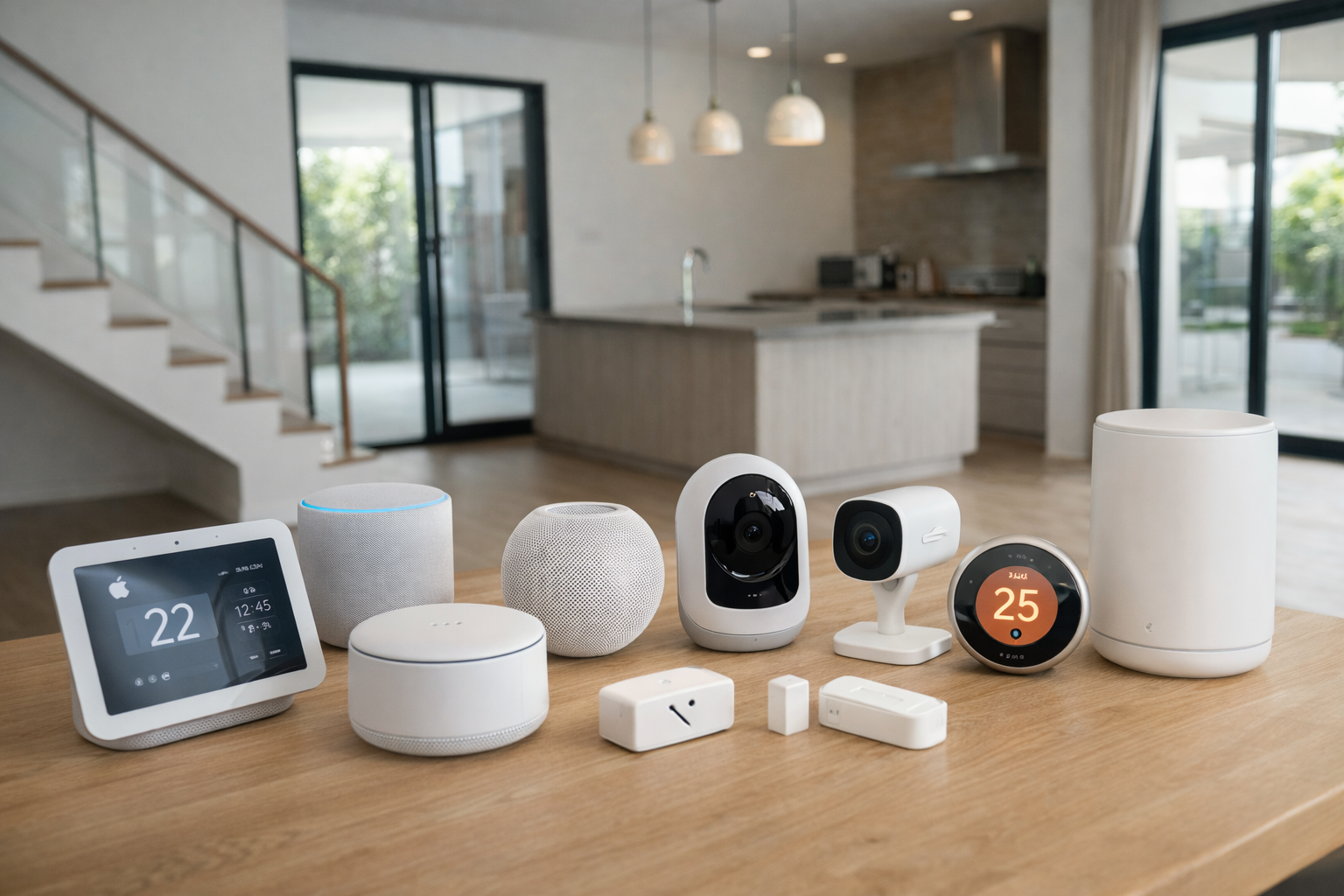
If you want a smart home that genuinely improves daily life, start here:
- A reliable smart door lock with emergency fallback
- Door/window sensors + motion sensors
- Smart switches/plugs for high-impact locations only
- Cameras focused on entry points (placement > megapixels)
- Smoke/heat and water-leak sensors
- UPS for networking and security gear
- One clear “control brain” that can scale
This avoids the classic mistake: buying random deals instead of building a coherent system.
Security hardening: 9 steps that make your smart home safer and calmer
- Put IoT devices on a separate network
- Disable unnecessary remote admin access
- Keep firmware updated on a schedule
- Use long, unique passwords and enable 2FA
- Prefer local control where practical
- Avoid cameras in private areas and manage permissions carefully
- Separate user roles for family/tenants/temporary helpers
- Tune notifications so you don’t end up muting everything
- Plan offline behavior for locks, lighting, and alerts
Energy era: solar + EV charging + smart home (do it by standards)
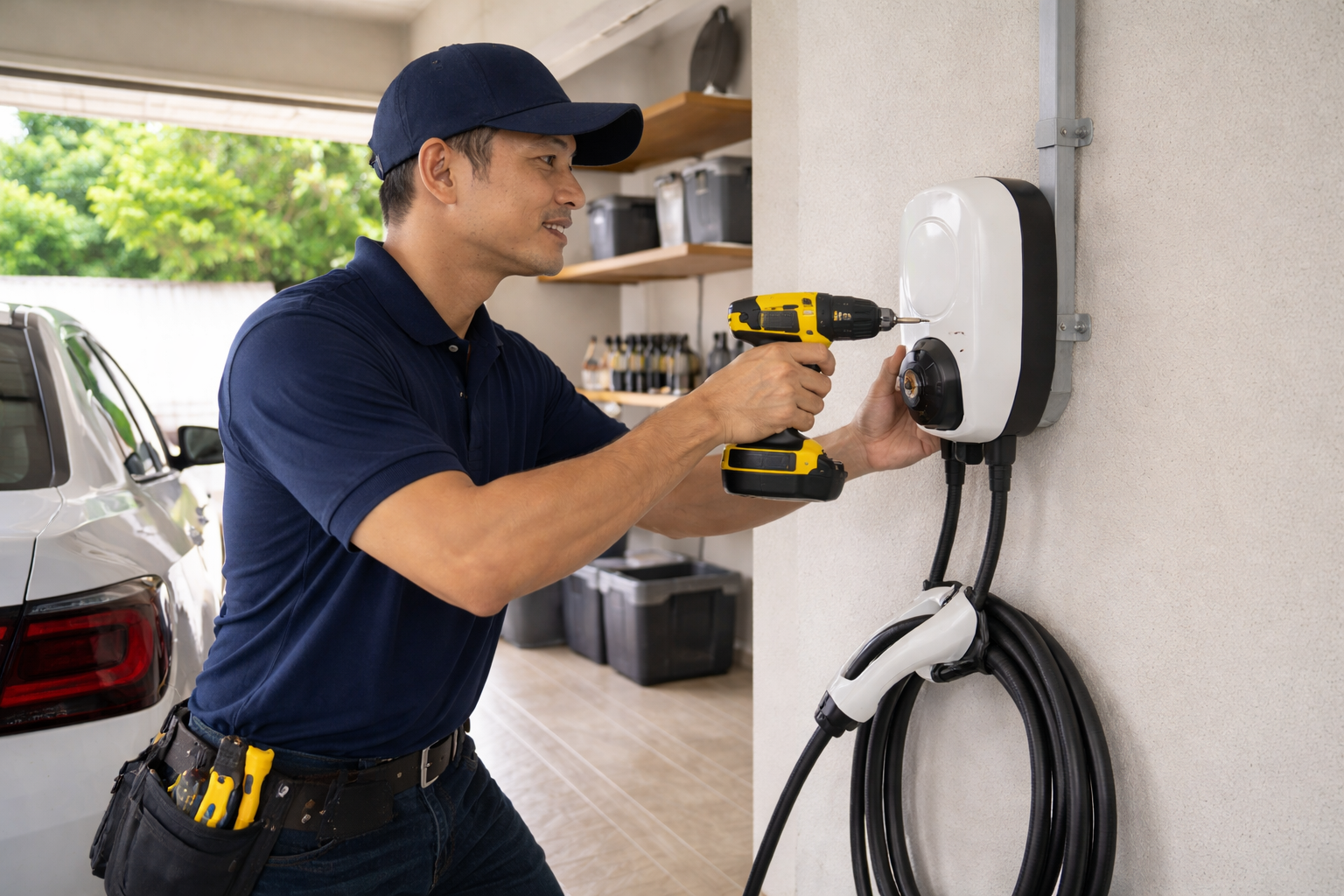
Thai homes are increasingly dealing with EV charging and solar rooftop planning. Electrical work must follow standards and the utility’s guidance, because it affects safety and grid stability. MEA has emphasized proper installation practices for EV chargers and rooftop solar to ensure system stability.
Smart-home logic can support energy control: scheduling heavy loads, monitoring unusual consumption, and keeping critical systems on backup power.